It is a story that is at once both narrowly technical and expansively existential.
It asks of you that you spend time dwelling in the experience of scrolling down, and clicking through, until the words become familiar, and the story begins to help you make sense of so much that is happening today that does not otherwise seem to make much sense.
As you begin to develop your own personal view on what it is that has gone wrong, it will also become clear what you can and should do to help make things right.
The Law is determined through institutional processes. A domain for experts.
The facts are determined by common sense, upon consideration of the evidence. A domain for people who care enough to take the time to make the effort to make ourselves familiar with such matters.
This is a story of facts, determined by common sense, applied by people who care, to enforce the law.
Interrogating the Numbers, to Reflect on the Morality of Money
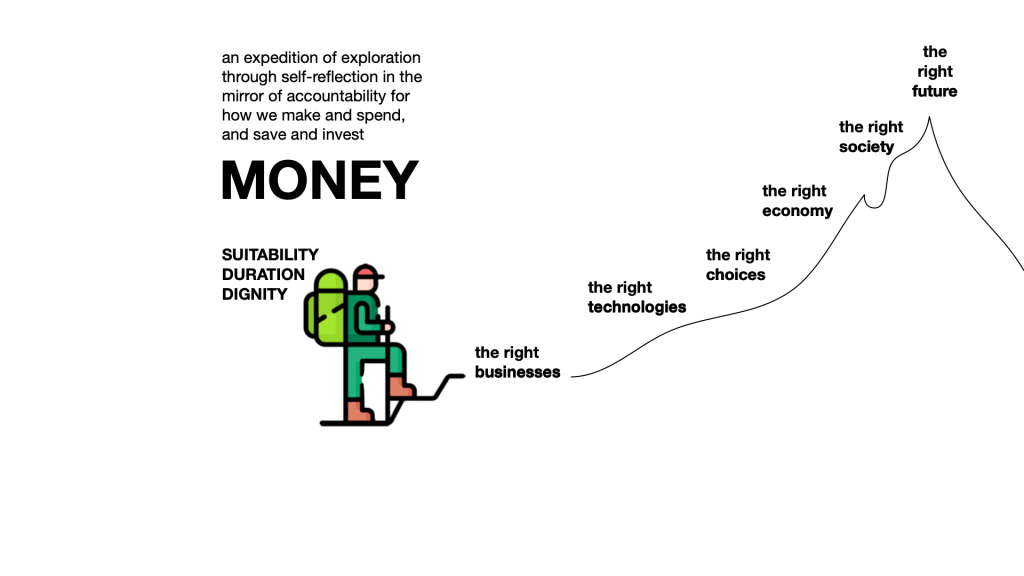
“When it is asked: “Why do you use the accounts?” It is because you will see the state of your affairs, you will see yourself, you will reflect on your morality as if you are looking at yourself in a mirror.”
THE METAPHYSICS OF ACCOUNTING WITH PAOLO QUATTRONE
A new language of savings for investment as capital for business
“Capital is just savings…”
– Peter Ellis, The Accidental Societist
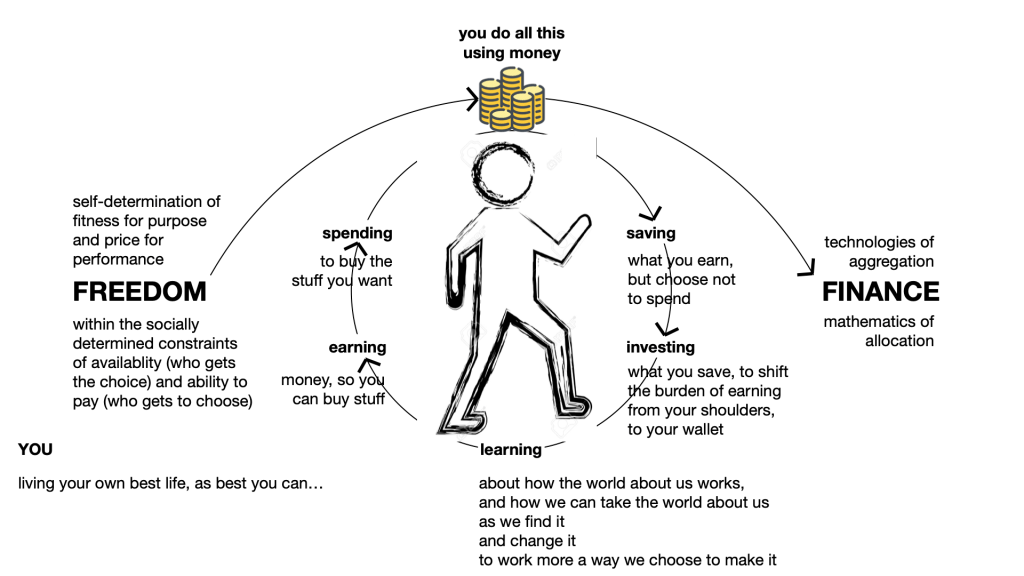
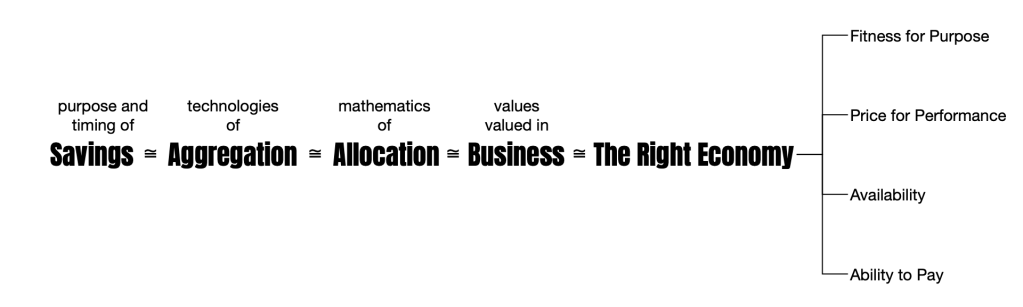
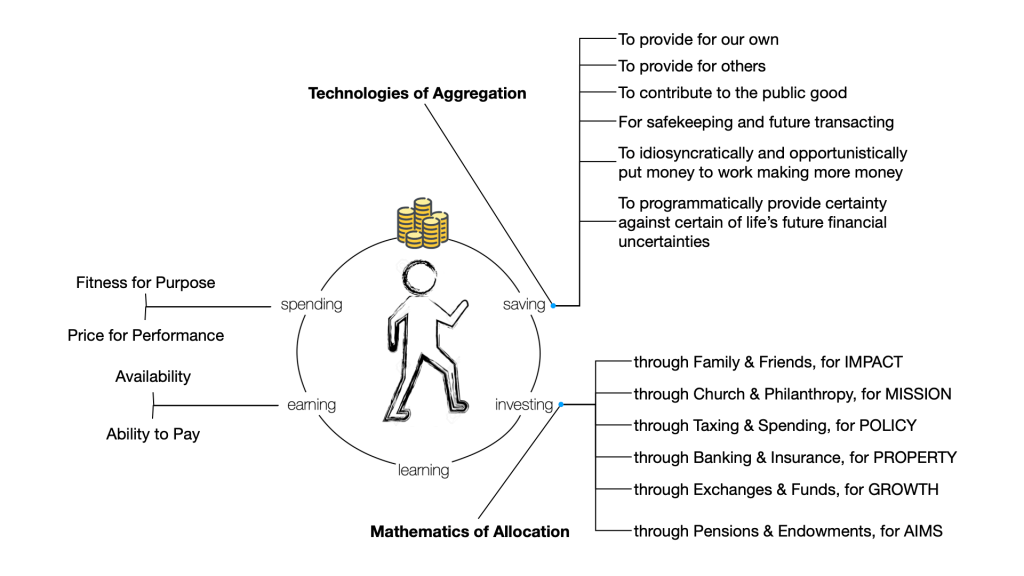
Savings is money set aside for a future purpose, for a future time, and made available for investment in financing for business that is aggregated by institutions of Finance for allocation to institutions of Enterprise for use as capital in doing business, through agreements on cost, qualifications, timing and terms.
Money as savings made available for investment in financing for Enterprise, for use as capital in the conduct of business, is the capacity to curate the right economy, an economy of fitness for purpose, price for performance, and fairly shared availability and ability to pay.
Or not.
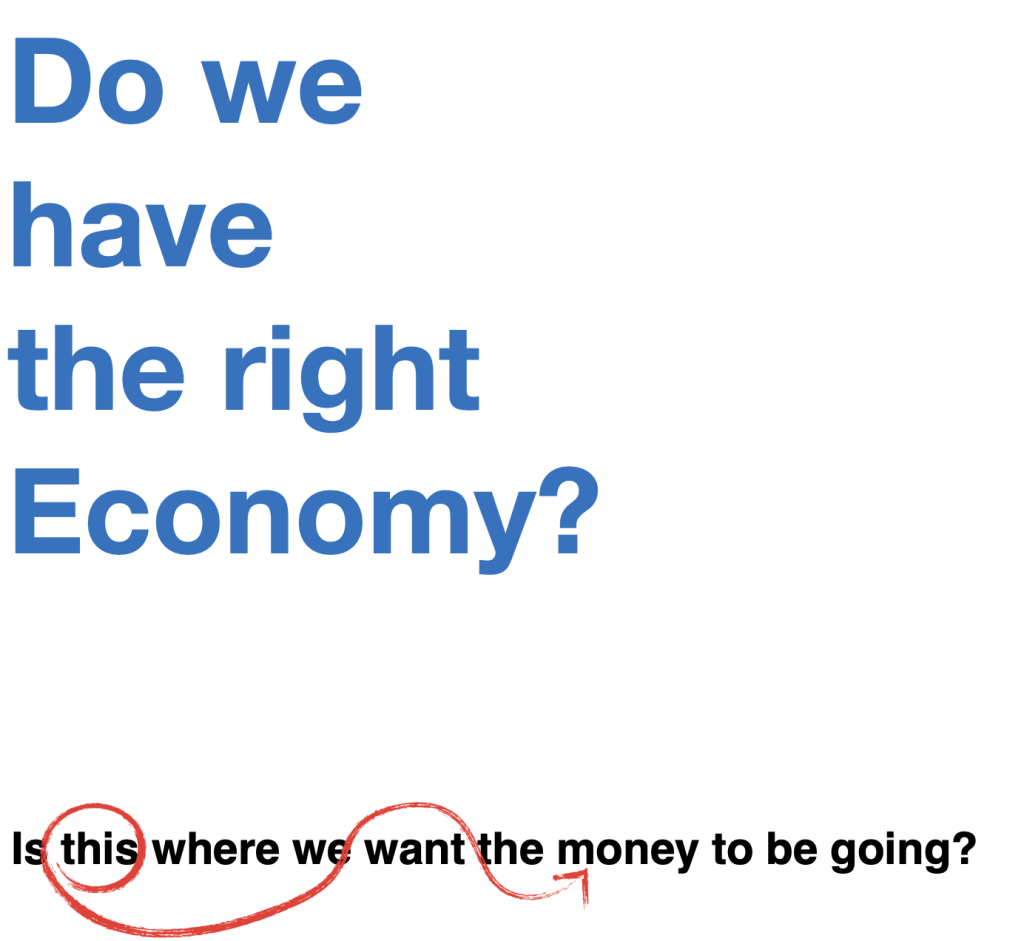
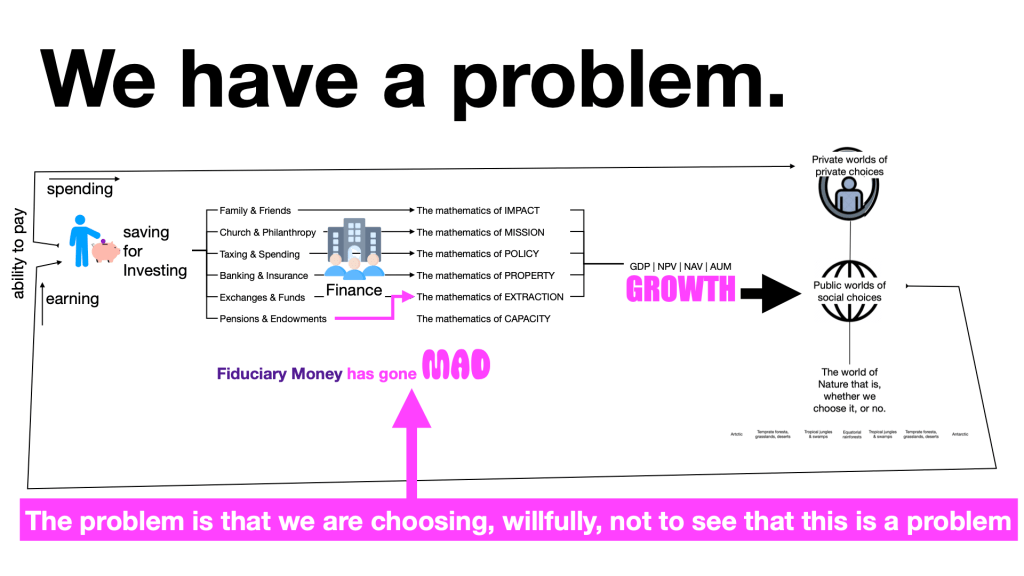
We have a problem.
“The rights and needs of the general population, of consumers and wider society, need to be attached to the economy through non-shareholder purposed entities, financed by other than privately self-interested capital.”
Peter Elllis The Accidental Societist
But they are not.
We have “other than privately self-interested capital”.
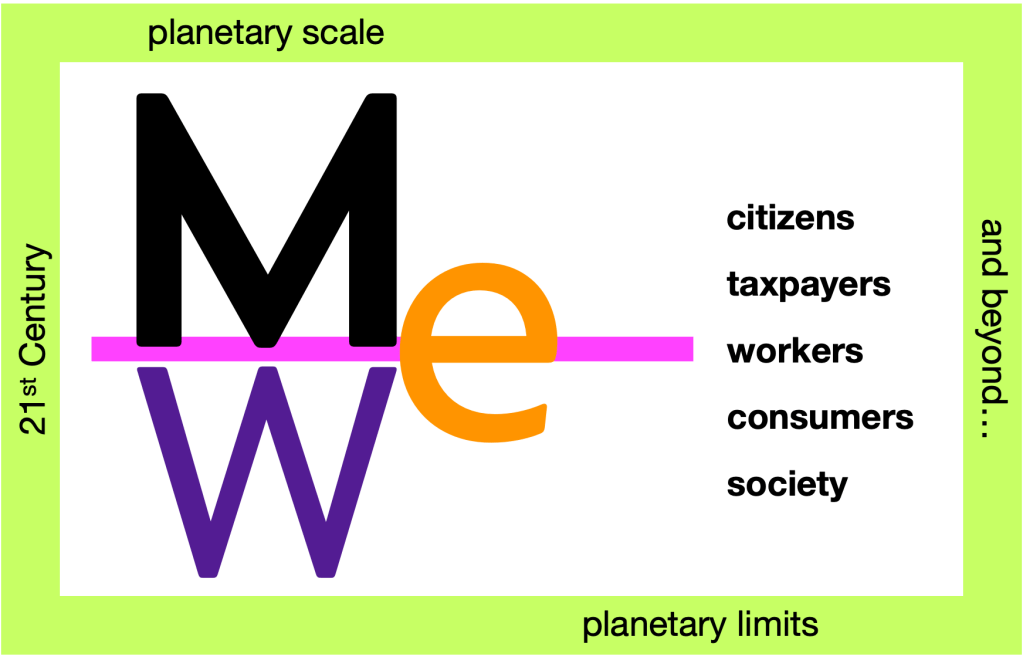
We have it at planetary scale.
In abundance.
Tens of trillions of it, collectively, worldwide.
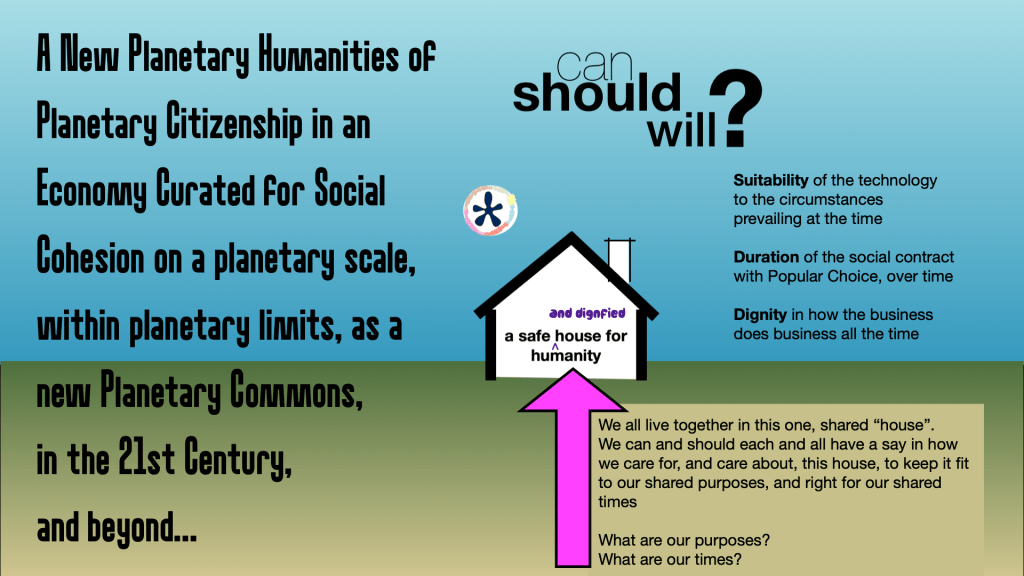
More than enough to curate the right economy, on a planetary scale, within planetary limits, in the 21st Century, and beyond.
It is the Mid-Century Modern social innovation of the Social Trust for Workforce Pensions. Supplemented by the 19th Century social innovation of the social trust for Civil Society Endowments.
But we are not using this social, “forever” money to finance “non-shareholder purposed entities”.
So we are not attaching “the rights and needs of the general population, of consumers and wider society” to the economy through fiduciary finance.
Even though we could be.
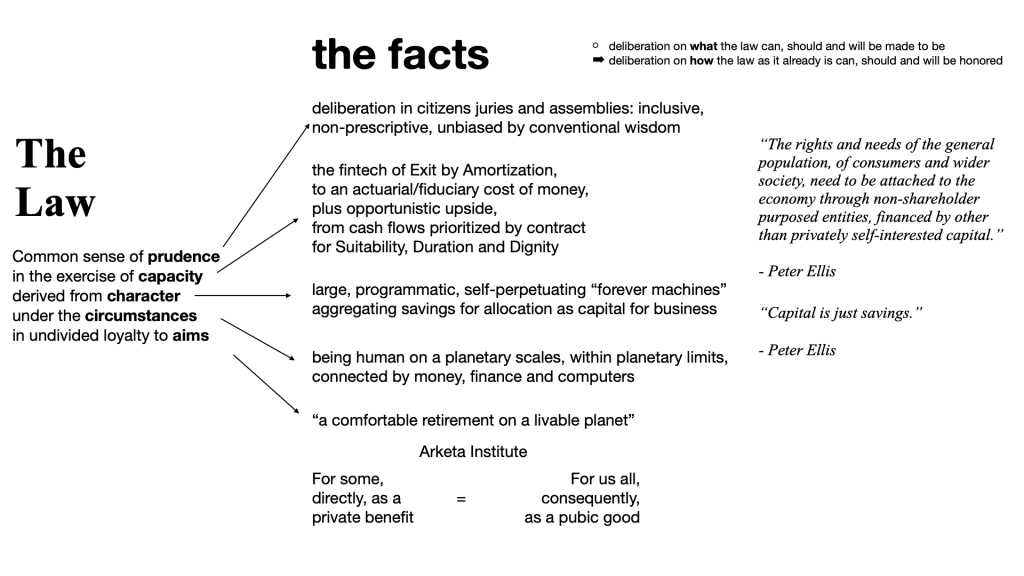
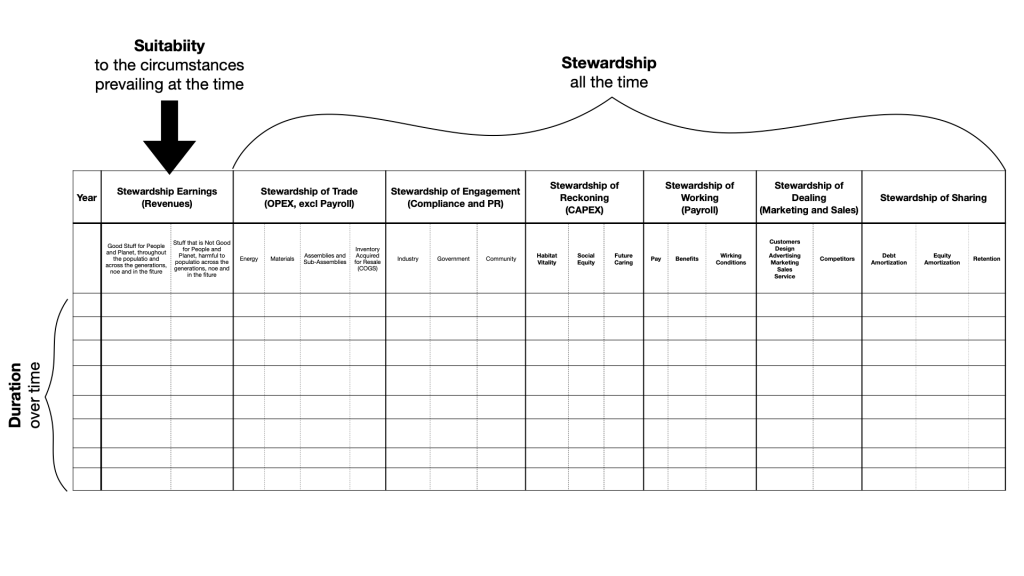
Because we do not see that these trusts have the capacity, derived from their character of size, purpose and time, to use the personal computing technologies of spreadsheet math, desktop publishing and digital communication to allocate the aggregations we entrust to their plenary powers of discretionary authority through the innovative new financial mathematics of exist through amortization to an actuarial/fiduciary cost of money, plus opportunistic upside, from cash flows through enteprise that are prioritized by contract for:
Suitablity of the technology to the circumstances prevailing at the time;
Duration of the social contract with popular chooce, over time; and
Stewardship of the way the business does business, all the time, across all six vectors of cash flow through business:
Stewardship of Trade, with suppliers
Stewardship of Engagement, with communities, of place, and of interest
Stewardship of Reckoning, with the consquences, for Nature, for Society and for our shared Future;
Stewardship of Working, in the workplace
Stewardship of Dealing in the marketplace
Stewardship of Sharing, with the savers whose savings are the raw material out of which capital for busienss is fashioed through Finance, fiduciary and otherwisee.
Since we do not see that they have this capacity, we are not holding them accountable for prudence in their exercise of that capacity, in undvided loyalty to the contractually specified aims for which they are legally invested with that capacity.
And since we are not holding them accountable for prudence and loyalty, in their exercise of tht capacity, they are not acting prudently.
It can only end, if we – as prudent people who care enough to take the time to make the effort to make ourselves familiar with these matters – speak up, in the Court of Common Sense, through conversation at the vanguard of a new public discourse , to put an end to it.
A new Common Sense of Capacity, Care (legally, prudence) and Caring (legally, loyalty)
the root cause is money, and finance, and forever money and fiduciary finance, and the failure of our common sense to hold forever money true to its fiduciary purpose, under the circumstance now prevailing
the first solution: is to update and upgrade our shared common sense of the capacity of forever money for prudence and loyalty
a wrong turning in the 1970s
a missed opportunity in the 1980s
a technical correction in our times
the final solution: a new social narrative of being human in society, through economy, using money on a planetary scale, and within planetary limits, in the 21st Century, and beyond
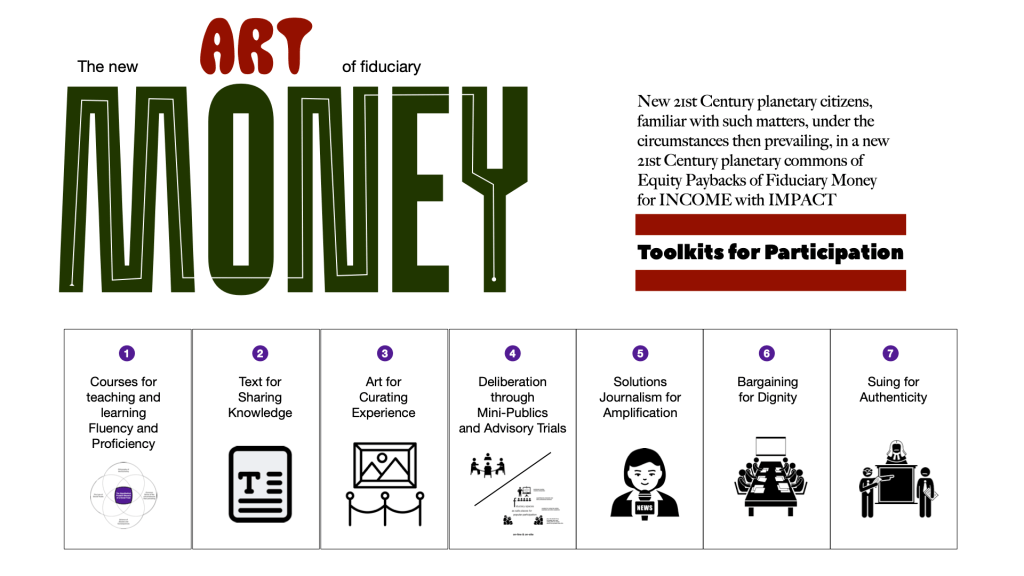
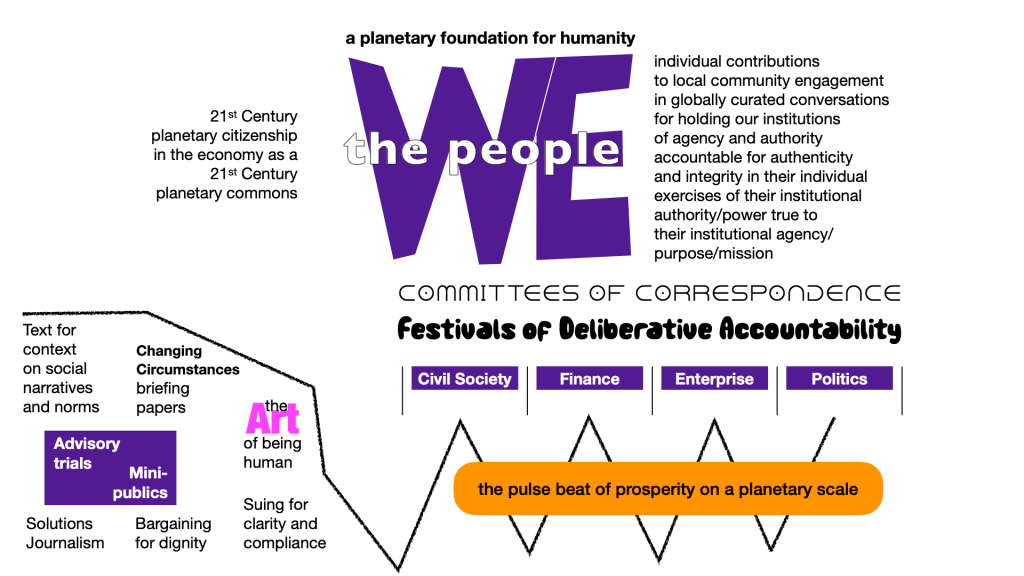
a new 21st Century planetary citizenship in the right economy as a new 21st Century planetary commons
exercised through individual contributions to local community engagement in globally curated conversations to articulate an adaptively evolving common sense of forever money fiduciary capacity, prudence and loyalty, under the circumstances then prevailing
small technical correction
BIG
existential (r)evolution
Join the technically correcting existential (r)evolution
as people who care enough to take the time to make the effort,
to make ourselves familiar with such matters as money and savings and investment and financing and capital and business and technology [= Arts, Manufactures and Commerce] and the economy and society and the future as our true frontier, and Civil Society, and Finance, and Enterprise and Politics, and Nature, and Humanity and YOU!
Deliberative politics, for enforcing existing laws.
In particular, the laws of fiduciary duty as they apply to the exercise of plenary powers of discretionary authority by fiduciary stewards of social trusts for Workforce Pensions and Civil Society Endowments, that requires of these stewards of society’s “forever” money:
prudence in their exercise
of the capacity they derive,
under the circumstances then prevailing,
from their legally constituted character
as large, programmatic and self-perpetuating “forever machines”,
in undivided loyalty to their contractually specified aims,
to assure income security in a dignified future to so many, directly, as a private benefit, that it is also, of necessity, for us all, consequently, as a public good,
according to the rubric of our common sense of their capacity, prudence and loyalty.
What is your sense of their capacity, prudence and loyalty?
Let’s deliberate!
humanities:
“the branches of learning (such as philosophy, arts, or languages) that investigate human constructs and concerns, as opposed to natural processes (as in physics or chemistry) and social relations (as in anthropology or economics)”
– Merriam-Webster Dictionary
Planetary Humanities:
Inquiry for new learning (through philosophy, arts, languages, culture, religion, social narratives of what is possible and what is permissible and social norms of what is right and true and good and beautiful) that investigates human constructs and concerns, on a planetary scale, and within planetary limits.
Join the journey,by talking about the crises, their origins and their resolutions.











 by talking about the crises,


