PE is conflict.
EP is caring.
PE = Profit Extraction.
EP = Equity Payback..
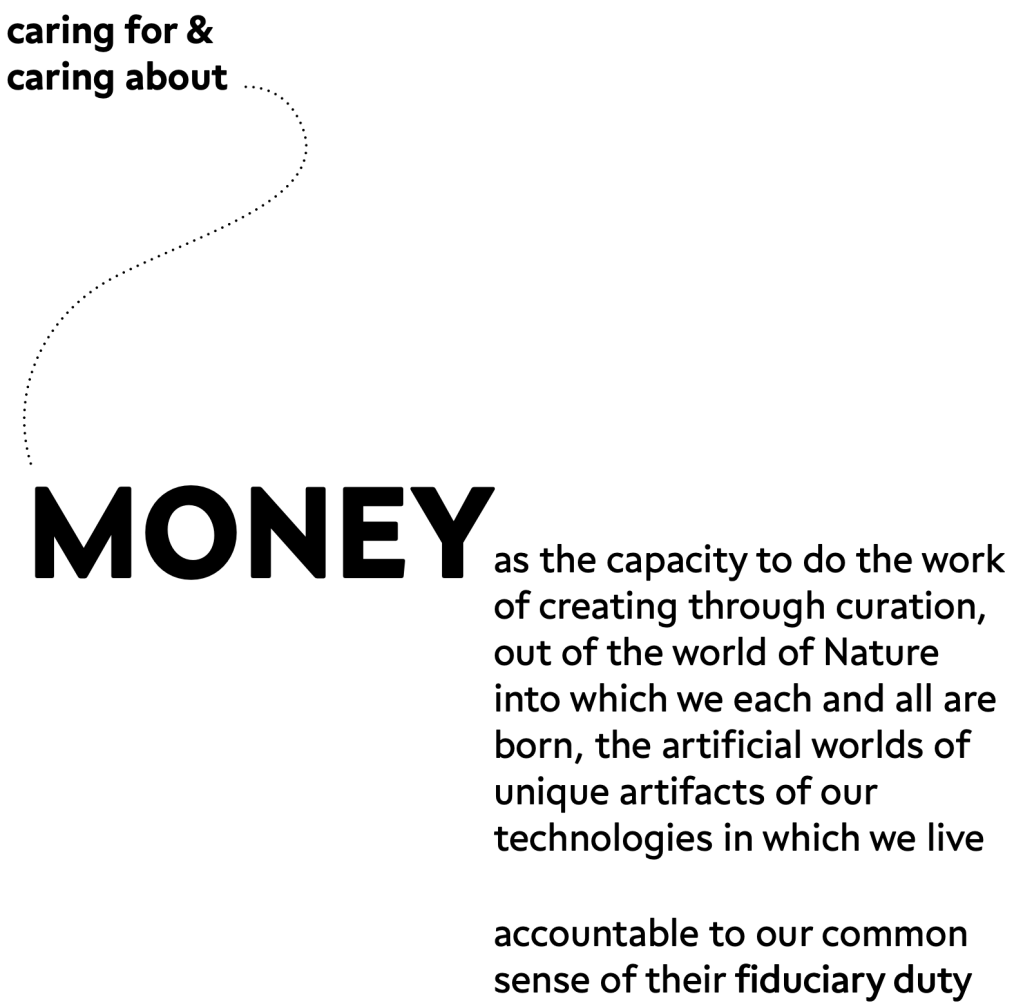
We start in crisis.
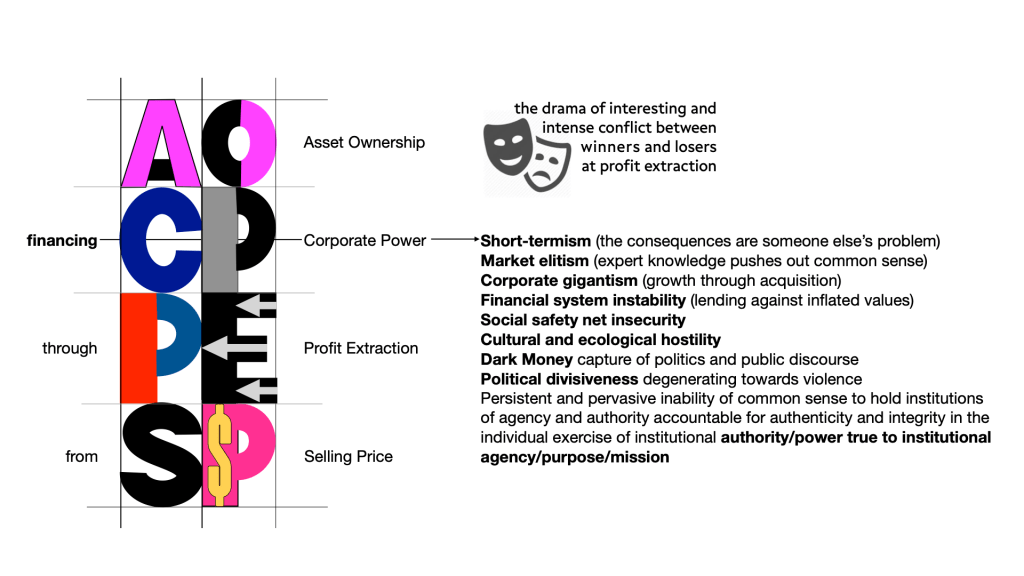
Asset Ownership financing Corporate Power through the financial mathematics of Profit Extraction from Growth in Selling Price

Social Cohesion on a planetary scale within planetary limits
=

“
the … systems through which we perceive, decide, and act are increasingly misaligned with the realities we face”
– Indy Johar,
We end in reconciliation.
A journey of inquiry for insight and new learning that can inform social innovations for evolving prosperous adaptations to the changing circumstances of our changing times, as humans living together, and apart, in society, through economy, using technology, money and the law on a planetary scale, and within planetary limits, in the 21st Century, and beyond…

- A small technical story of shifting fiduciary finance from the mathematics of profit extraction to the mathematics of equity paybacks, that opens up into
- a big rambling rewrite of our social narrative of being human in society, through economy, using technology, money and the law, and
- a new sociology of social choosing through institutions of agency, authority and acccounablity; that catalyzes
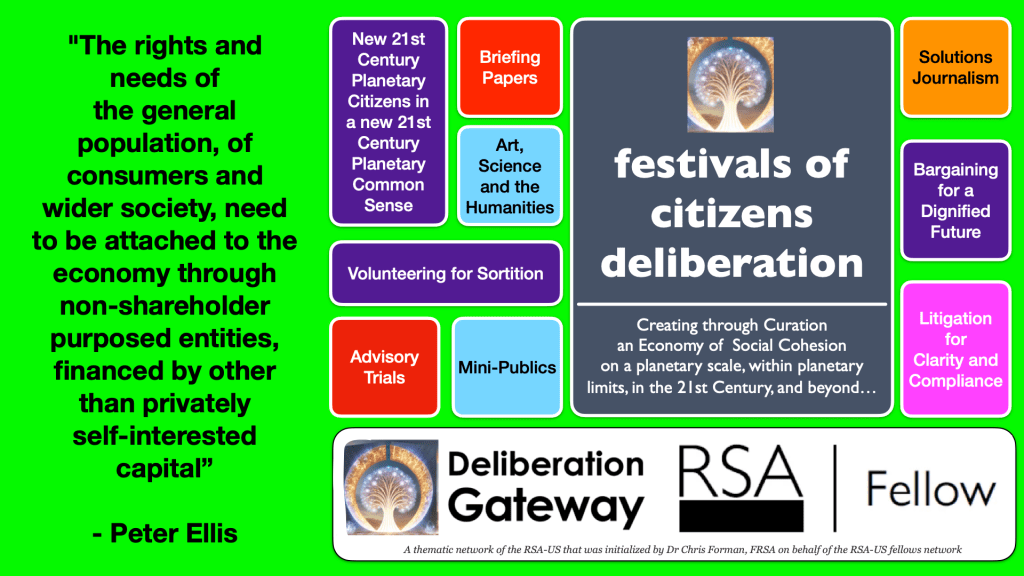
- the social innovation of a new 21st century planetary citzenship in an economy of social cohesion on a planetary scale, within planetary limits, as a new 21st Century planetary commons, through citizens deliberations on the prudence of Pensions & Endowments in the exercise of the capacity they derive from their character in undivided loyalty to their aims.

The math we have – the mathematics of Asset Ownership financing Corporate Power through Profit Extraction from Growth in Selling Price – is not giving us the economy we need and want: an economy of social cohesion on a planetary scale, within planetary limits, in the 21st Century, and beyond…
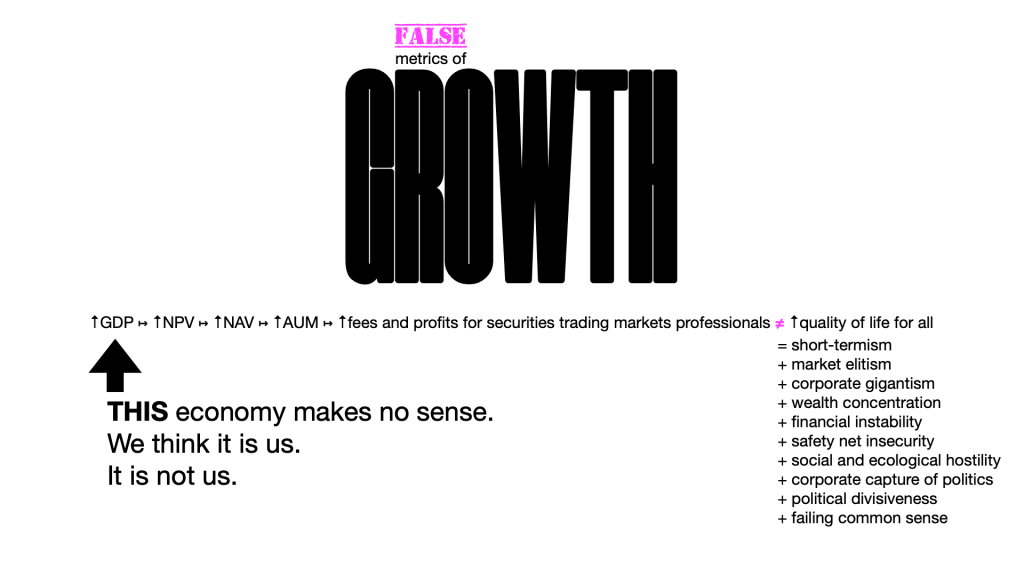
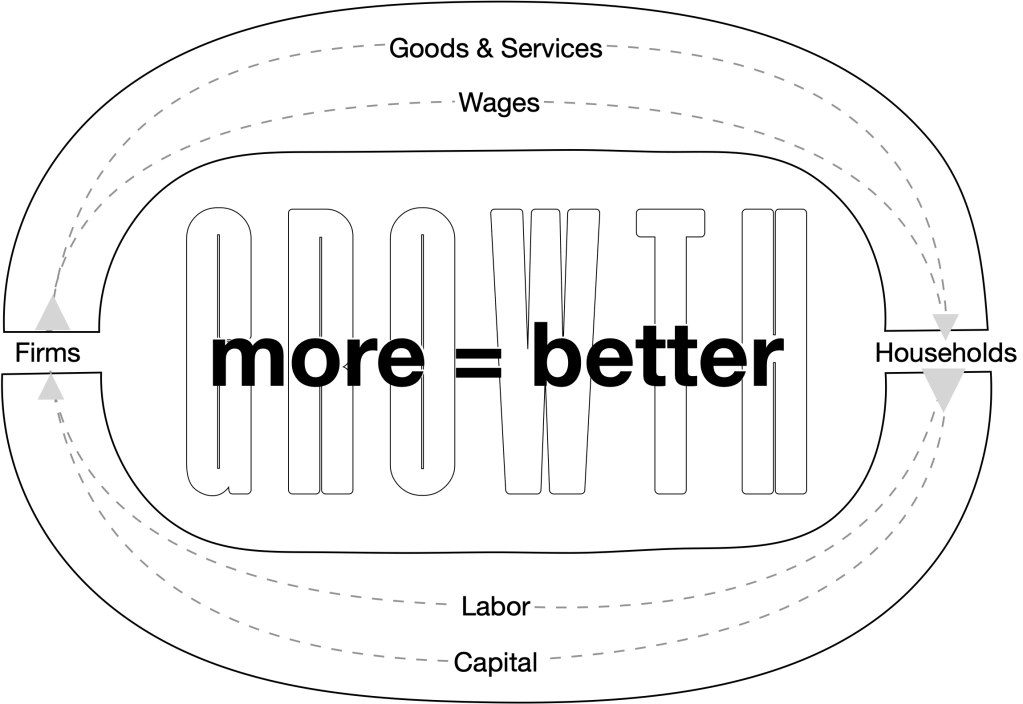
Problems with the Growth Story of Human Being and Well-Being
“
what is often defended as ‘realism’ is in fact familiarity”
– Sophie Parker
https://www.jrf.org.uk/imagination-infrastructures/reimagining-realism-notes-on-the-work-of-a-time-between-worlds#_-supporting-alternatives-in-a-time-between-worlds
No People
One is that it is a-human. There are no people in this economy. There are only Factors of Production and Units of Consumption.
“
Life isn’t about efficiency. It is about human connection.”
– Matt Orsagh,
https://degrowthistheanswer.substack.com/p/the-best-things-in-life-are-inefficient
No Society
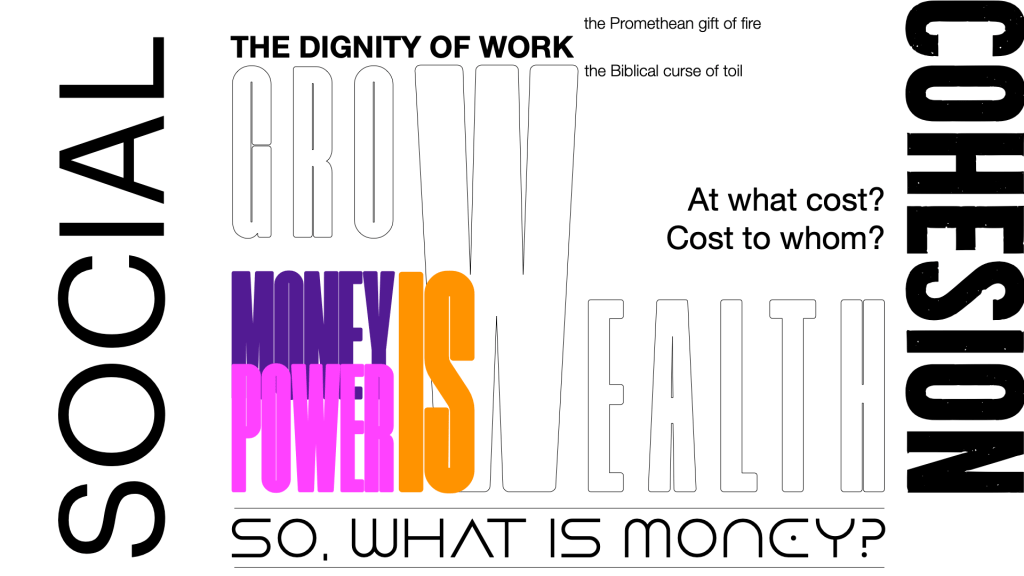
Another is that there is no society in this economy. No social order, and so, no rubrics of social cohesion, and also no rubrics of social discord.
No Money
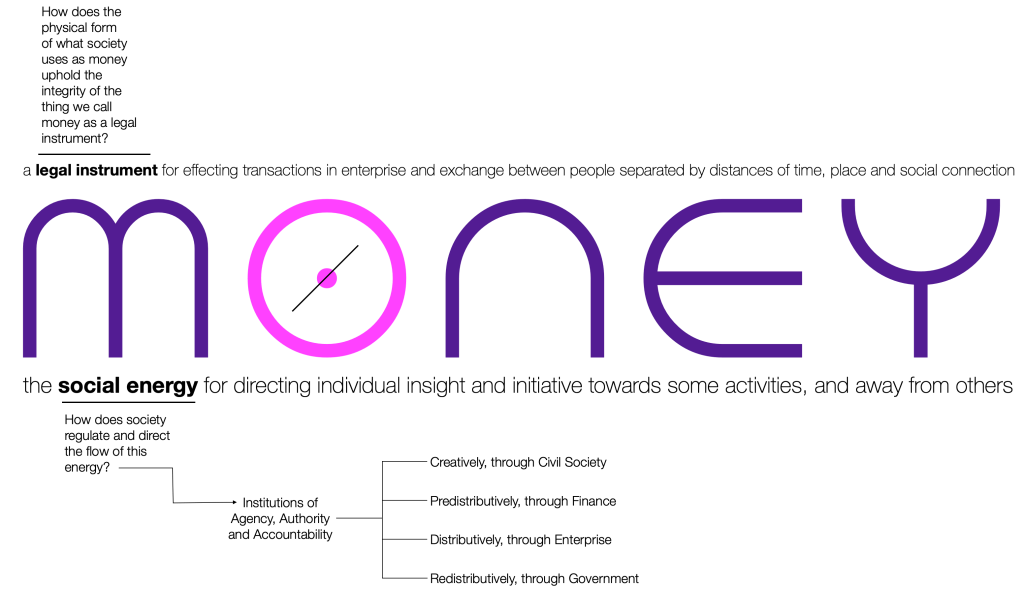
A third is that there is no money in this economy. Or at least no theory of money that helps us make the social power of money make sense to our common sense.
No Consequences
A fourth is that there are no consequences in this framing of the economy. Production is always beneficial. Consumption is always equitable. The Market is always perfectly self-regulating. Mysteriously, and magically. But unquestionably.
Except that it is not. There are always negative, as well as postive, consequences to our human use of technology. Prudent stewardship requires that we care about, and take care of, those consequences.
Human enterprise and exchange is filled with tensions, small and large: the drama of “interesting or intense conflicts of forces” (Merriam-Webster dictionary definition of the word, drama). But the currently customary framing of “production and consumption between firms and households” is silent about those tensions. It tells us nothing about structural inequities, or institutional accountability, leaving us to believe, instead, that there are no inequities, and no need for accountability.
Which lived experience tells us is not true.
“our current system does not deliver prosperity. It delivers wealth and power for the few, and a never-ending race for everyone else”
Matt Orsagh,
No Accountability
A fifth is that this familiar framing of the economy does not give us a frame within which we can ask ourselves, Do we have the right eonomy?
Within this frame the only rubric I can see is the metric of Growth: if the economy is growing, then this frame tells it is also right; if it is not growing, this framing tells us the economy is wrong. The more Growth, the more right.
Which is not right.
A More Human, Societal, Money-Powered for Caring and Accountability Economy
I see a better story of the economy as a safe and dignified house for humanity .

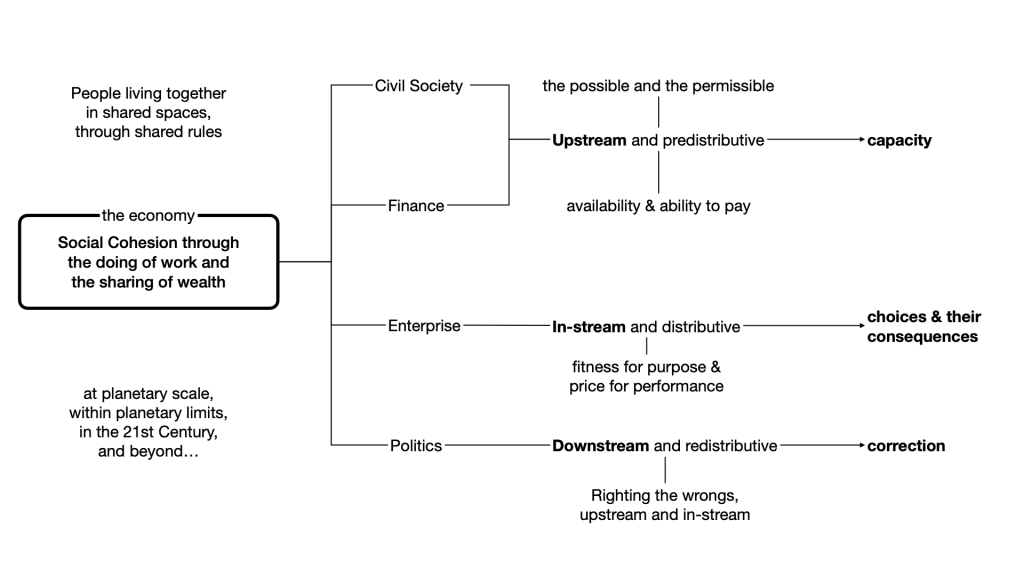
I see a need for a Human-centered, Money-powered economy that is curated socially, through institutions of Civil Society, Finance, Enterprise and Politics…
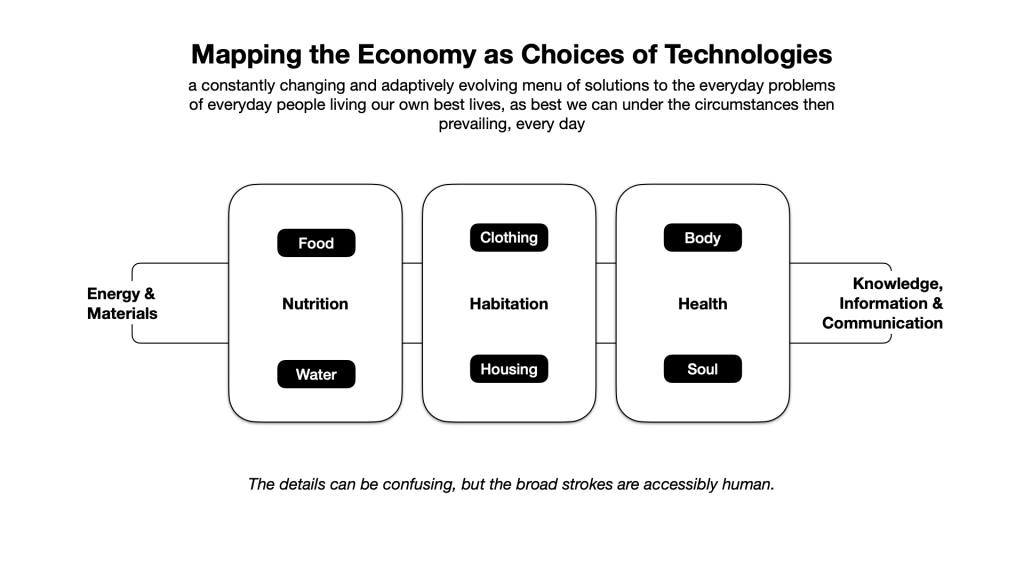
…to evolve prosperous adaptations to life’s constant changes to offer choices, and make the ability to choose, on a planetary scale and within planetary limits across five core needs of being human:
- Energy and Matter, and all the raw materials
- Nutrition – food and water, and all the many technologies that create through curation abundance, security and dignity
- Habitation – clothing and construction for comfort and protection and associated infrastructure for utilities and transport and our occupancy of space in place more broadly
- Helathcare – physical and, for lack of a better word, spiritual of people living in our own worlds with our shared worlds within the world of Nature; and
- Knowledge, Information and Communication for connecting individuals to shared puprose in community, on a planetary scale, within planetary limits.


The (universal) law of fiduciary duty requires:
- the PRUDENCE of the prudent person familiar with such matters
- in the exercise of CAPACITY derived,
- under the CIRCUMSTANCES then prevailing
- from their legally constutited CHARACTER
- as large, programmatic and self-perpetuating social rusts taht are “forever” machines
- in undvided loyalty to their contractually specified AIMS
- to assure
- income security in a dignified future
- to so many, directly,
- as a private benefit
- that it is also, of necessity
- for us all, consequently,
- as a public good
UPGRADING our common sense of the capacity of Fiduciary Money under the circumstances now prevailing…
Profit Extraction from GROWTH

Equity Paybacks for Social Cohesion
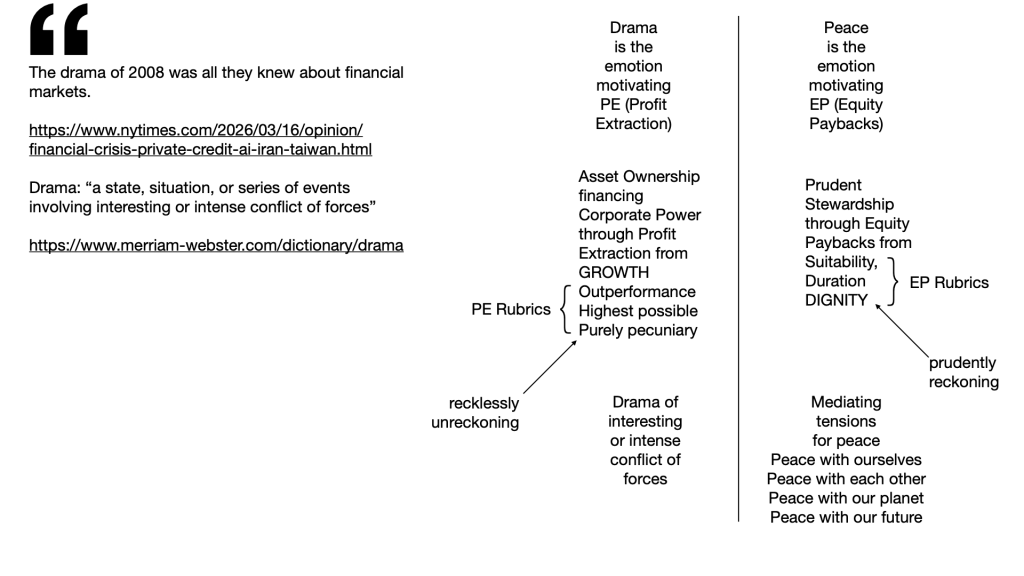
The drama of 2008 was all they knew about financial markets.
https://www.nytimes.com/2026/03/16/opinion/financial-crisis-private-credit-ai-iran-taiwan.html
PE is conflict.
Drama: “a state, situation, or series of events involving interesting or intense conflict of forces”
https://www.merriam-webster.com/dictionary/drama
EP is caring.
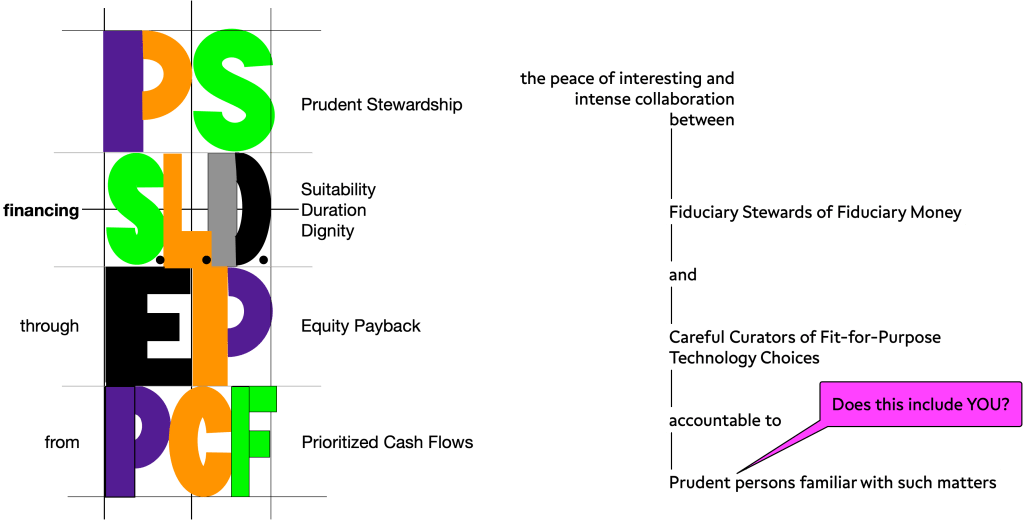
A new financial mathematics of sufficiency for some and all, now, and later

“the way we have been taught to think about money is at best out-dated, at worst, plain wrong. And it’s at the heart of much of our crises.”
Newsletter #6: Money, finance and the (new) rules of the game
Regenerative Economy Lab.We need to correct and update our way of thinking about money.
And that’s a problem.
Because the way we have been taught to think about money is so incomplete and incoherent, such a tangled web of self-interest masquerading as disinterested truth, that contemporary stories about money make no sense no our common sense, unless our own self-interest aligns with the masquerade of disinterest.
the way we are being taught to think about money makes money feel terrifying to too many

The problem this creates is that untangling the tangle – to “slay the dragons” of misunderstanding about money – becomes:
“one long exercise in augmentation of high cognition, so that our wisdom becomes strong enough to destroy wrong thinking maintained by resistance to change”
Charlie Munger, late of Berkshire-Hathaway
The problem is that this augmentation of high cognition is not a linear process. We cannot go step by step.
There are no IKEA-style assembly instructions.
We each have to find our own point of beginning, and pull on the threads of chaos and confusion as we encounter them, to separate self-interest from disinterest, until the new story, which is a more correct story, begins to make sense to our own common sense.
It’s a Make-Your-Own-Adventure.

Join the journey, by talking about the crises,
their origins and their resolutions.


