This is democracy through deliberation on capacity in the economy.
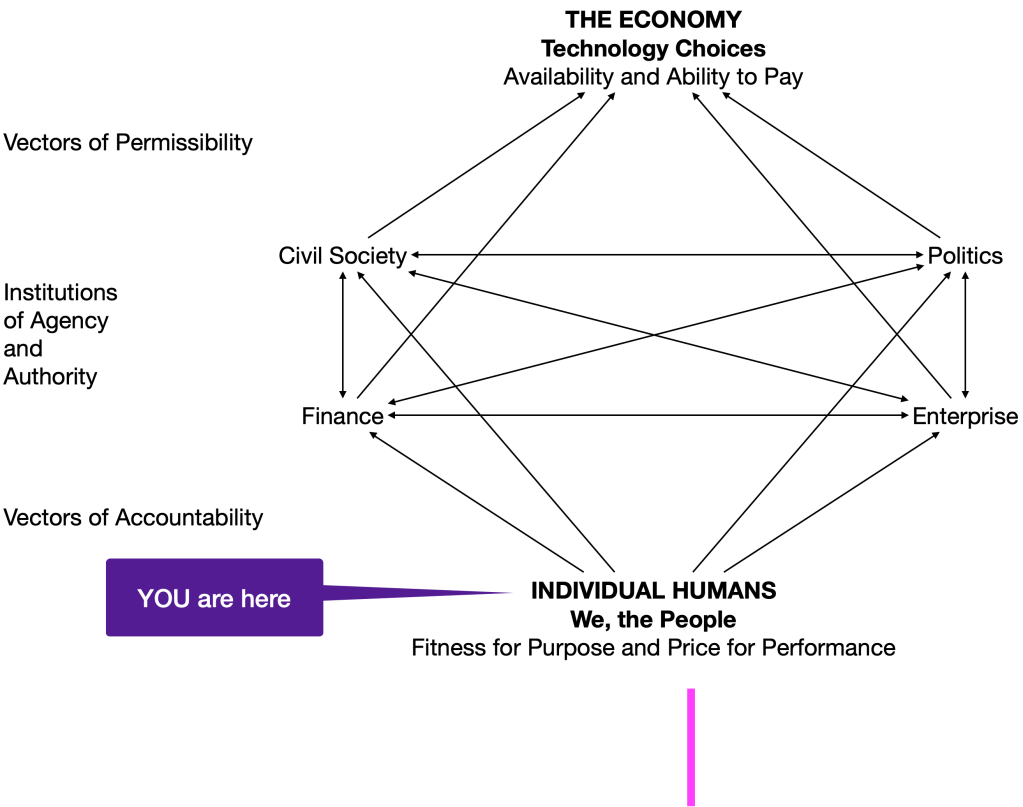
Citizens Deliberation on the economy – “what kind of world do we want, an dhow can we make it happen” (Simon Mair) – is made possible by innovations in the institutions of fiduciary finance, and the new business of syndicating forever money aggregated into Pensions & Endowments as “other than privately self-interested capital” financing “non-shareholder purposed entities” to align the economy with “the rights and needs of consumers, and the wider population” (Peter Ellis, The Accidental Societist).
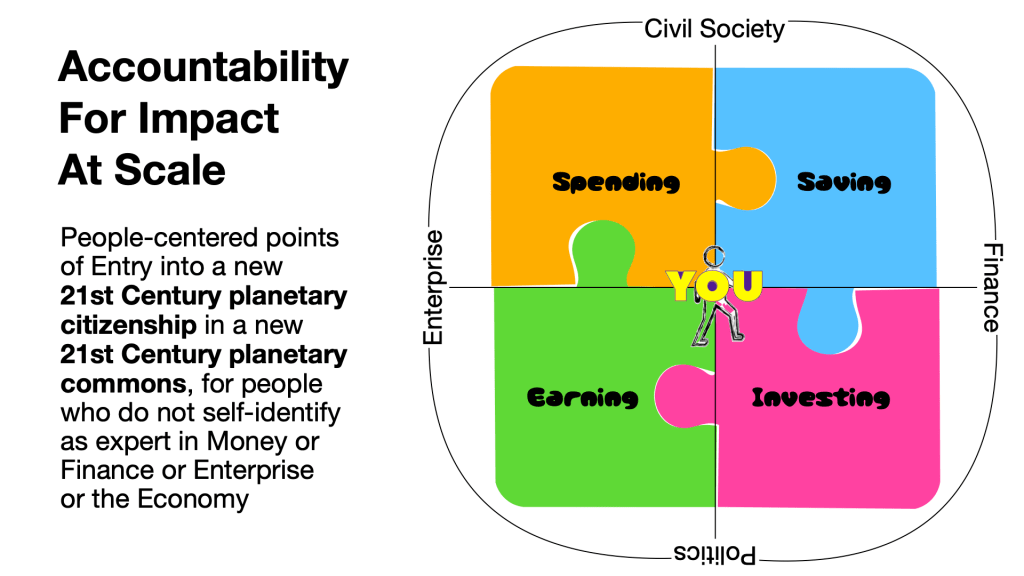

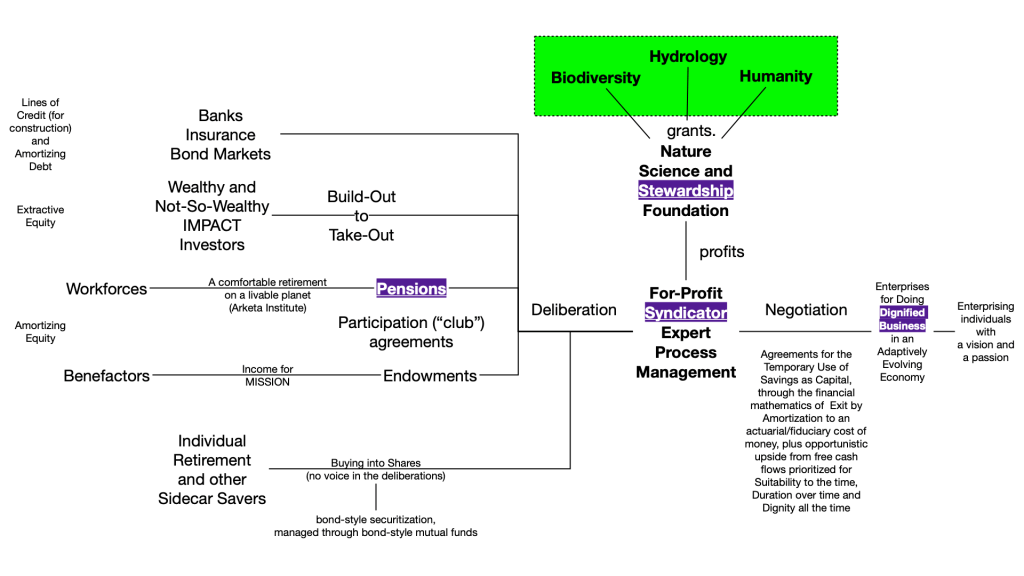

These innovations in fiduciary finance are made possible by the new financial mathematics of Exit by Amortization to an actuarial/fiduciary cost of money, plus opportunistic upside (an evergreen residual) form free cash flows prioritized by contract for:
- Suitability of the technology to the circumstances prevailing at the time;
- Duration of the social contract with popular choice, over time; and
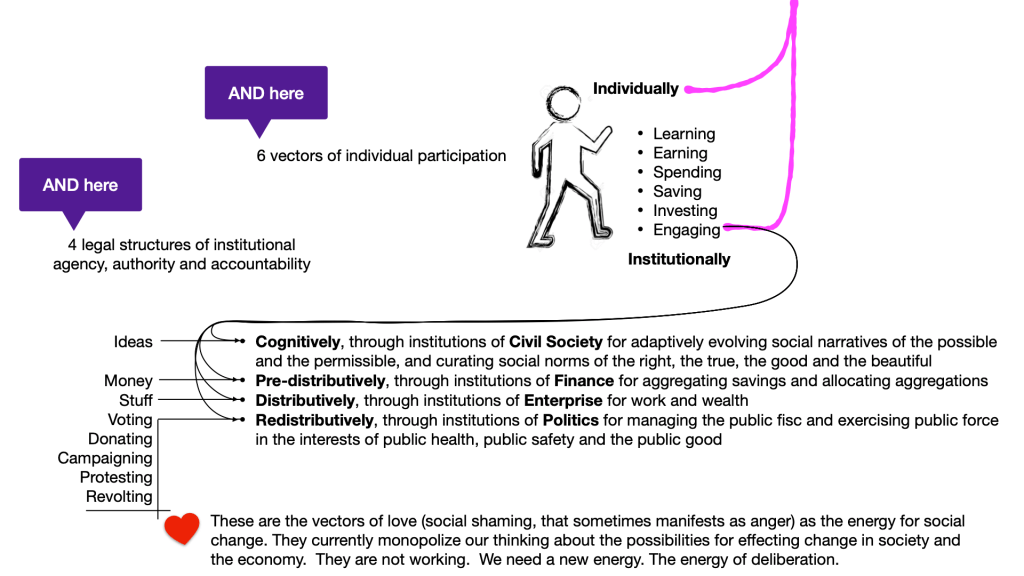
- Dignity in how the business does business, all the time, across all six vectors of cash flow through business
- Dignified Trade, with suppliers;
- Dignified Engagement, with communities, of place, and of interest;
- Dignified Reckoning, with the consequences, on Nature, on Society and on our shared Future;
- Dignified Working, in the workplace
- Dignified Dealing, in the marketplace (sales practices and selling prices);
- Dignified Sharing, with the savers whose savings are transformed into capital for doing business by Finance.
This new financial mathematics is made possible by the information technologies of personal computing for spreadsheet modeling, desktop publishing and digital communication.
Looking at business through a spreadsheet shows us a very different view of the economy than what we see when we look at business from the viewpoint of a trader in the trading pits of the New York Stock Exchange.
That view shows us the economy as a market for allocating scarcity using price, powered by the machinery of production for consumption by firms and households exchanging good and services for labor and capital, that calls on each and all of us to work hard to produce and consume more, as factors of production and unties of consumption, so that the markets can give us more, on the promise that:
- more quantities in the markets will always also mean a better quality of life for all;
- we each will always be free, as freely self-determining, rationally self-interested market participants, to freely determine, each for ourself, our own fair share of the more quantities that is also always a better quality.
This narrative of more that is better doesn’t really give us very much, as citizens, to deliberate upon.
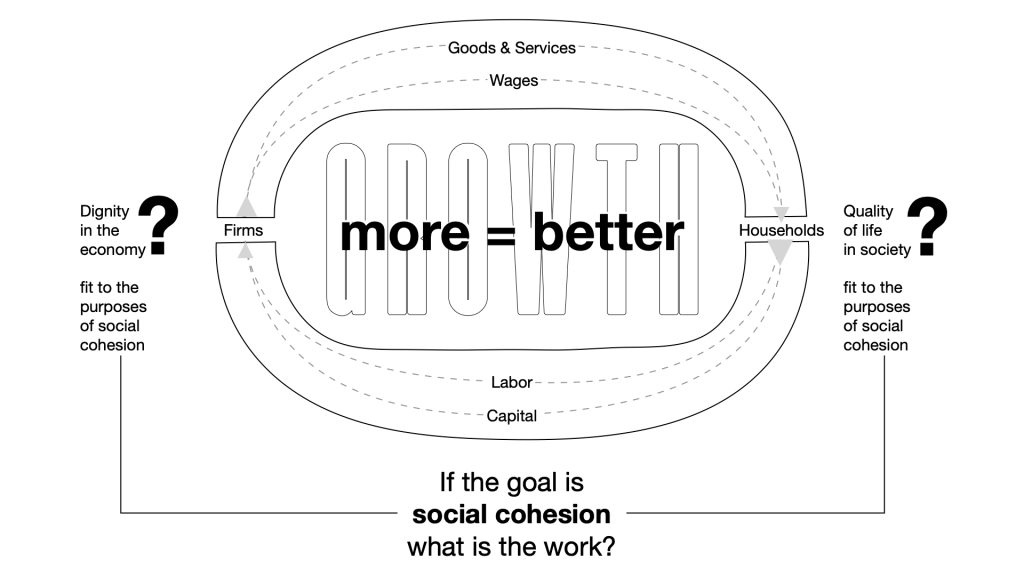
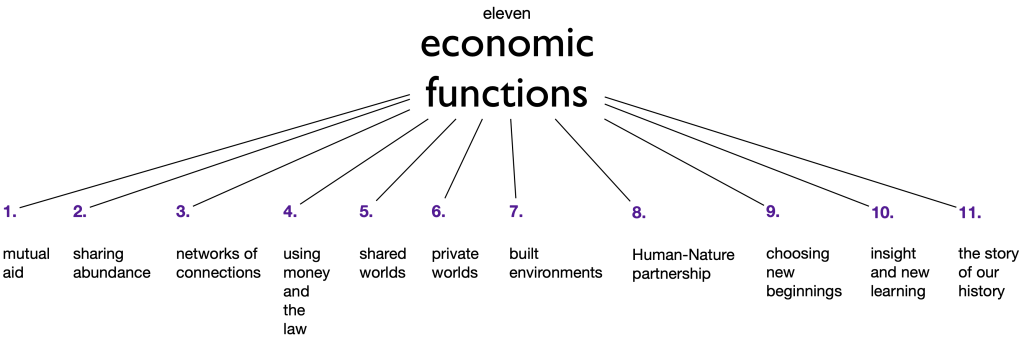
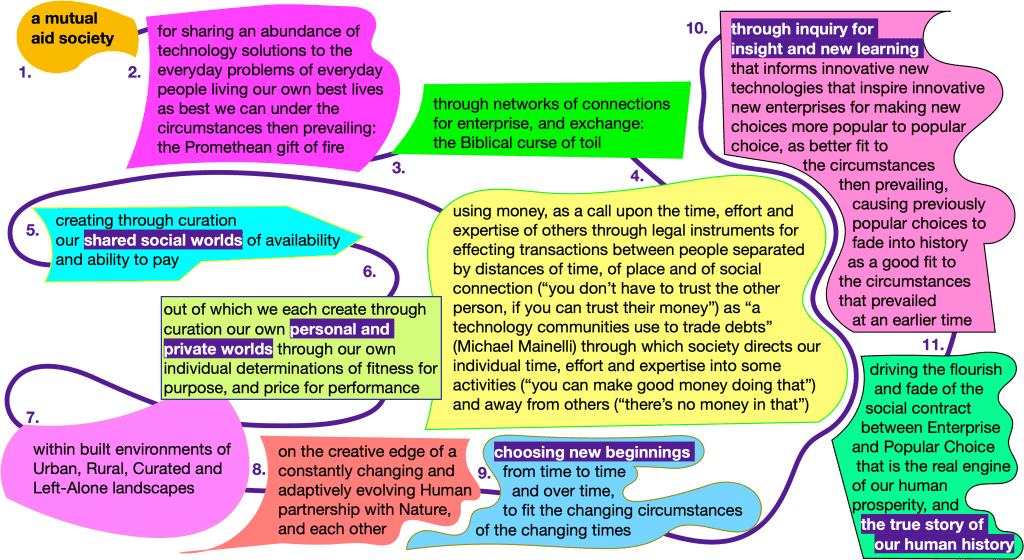
Syndication of forever money shows us a more complex, more human, more life-affirming, socially responsible, citizenship empowering view of the economy as:
- a mutual aid society
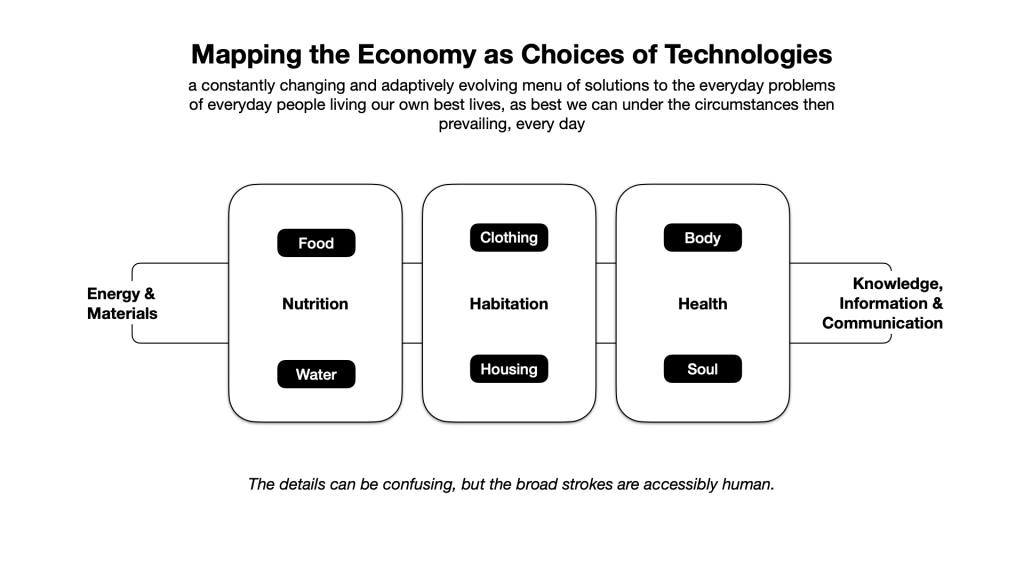
- for sharing an abundance of unique artifacts of technology solutions to the everyday problems of everyday people living our own best lives, as best we can, under the circumstances then prevailing, everyday (the Promethean gift of fire)
- through networks of connections for enterprise and exchange (the Biblical curse of toil)
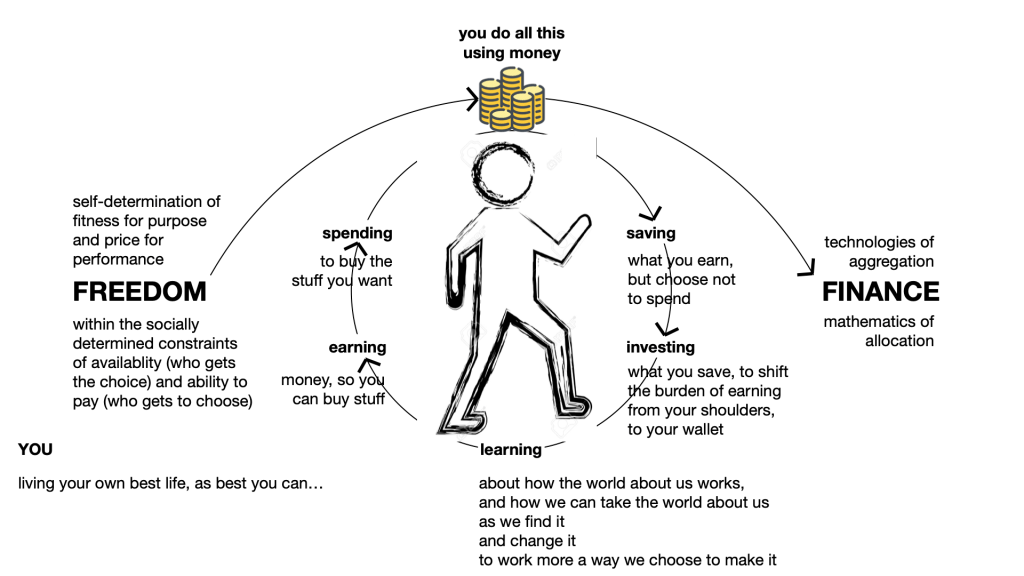
- using money as a call upon the time, effort and expertise of others through legal instruments for effecting transactions between people separated by distances of time, of place and of social connection (“you don’t have to trust the other person, if you can trust their money”) as “a technology communities use to trade debts” (Michael Mainelli) through which society directs our individual time, effort and expertise into some activities (“you can make good money doing that”) and away from others (“there’s no money in that”)
- creating through curation our shared social worlds of availability and ability to pay
- out of which we each create through curation our own personal and private worlds through our own individual determinations of fitness for purpose, and price for performance
- within built environments of Urban, Rural, Curated and Left-Alone landscapes
- on the creative edge of a constantly changing and adaptively evolving Human partnership with Nature, and each other
- choosing new beginnings from time to time, and over time, to fit the changing circumstances of the changing times
- through inquiry for
- insight and new learning
- that informs innovative new technologies that inspire innovative new enterprises for making new choices more popular to popular choice, as better fit to the circumstances then prevailing, causing previously popular choices to fade into history, as a good fit to the circumstances that prevailed at an earlier time
- driving the flourish and fade of the social contract between Enterprise and Popular Choice that is the real engine of our human prosperity, and the true story of our human history

being ready is all about knowing the lingo