
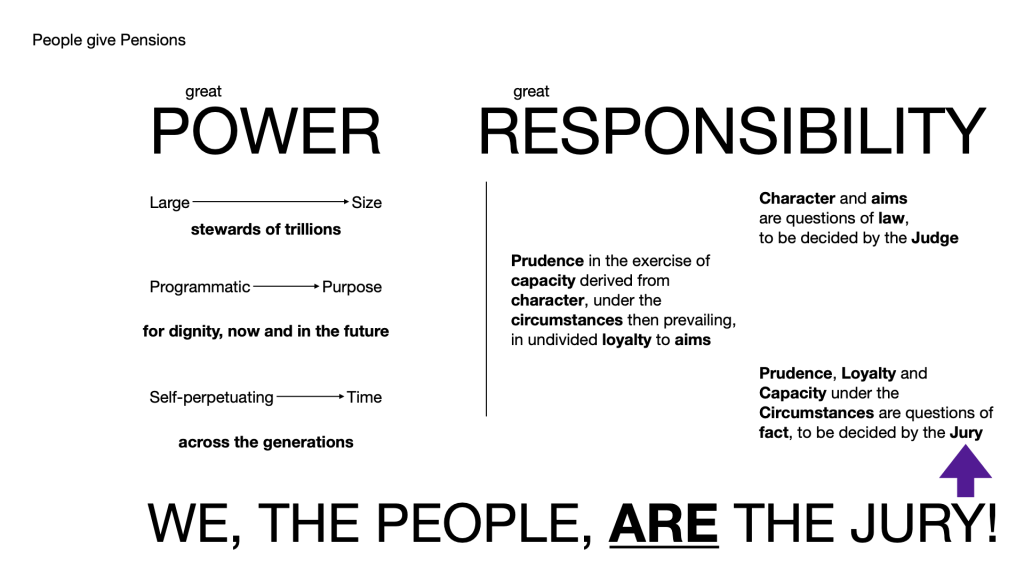
The law of fiduciary duty, as it applies to the fiduciary stewards of social trusts for mutual aid societies for Workforce Pensions and Civil Society Endowments, requires
- prudence, according to the prudent person familiar with such matters (= The Hypothetical Reasonable Person)
- in the exercise of capacity
- derived from character
- under the circumstances then prevailing
- in undivided loyalty to aims
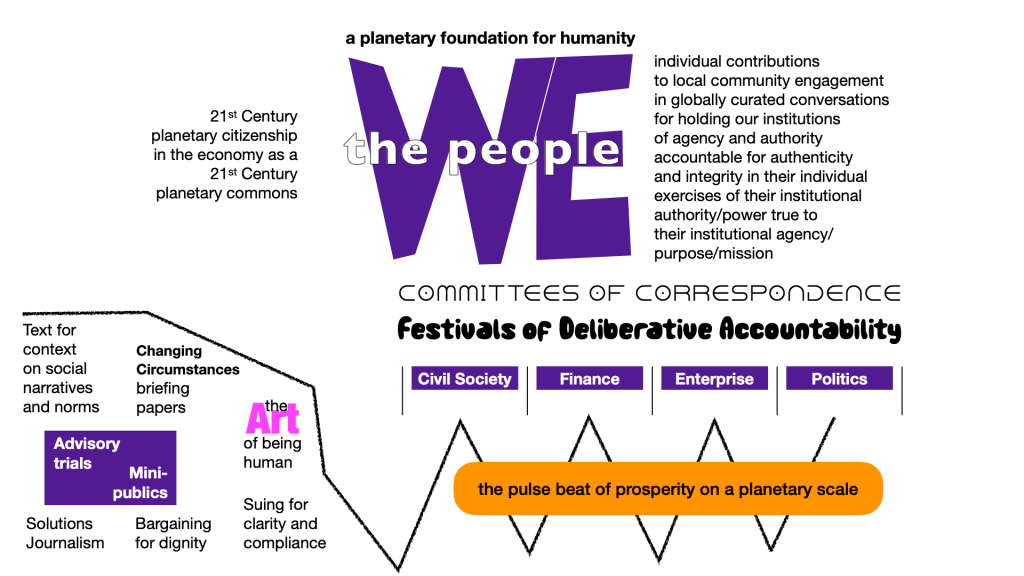
THIS is how we democratize Fiduciary Finance.
Because WE are the Hypothetical Reasonable Person, our common sense, as sensible people who care enough to take the time to make the effort to make ourselves familiar with such matters.
THAT is the standard to which the law holds:
- those who are entrusted
- by society
- with plenary powers of discretionary authority
- over the allocation of tens of trillions
- in society’s “safe” money
- aggregated, collectively, worldwide,
- into social trusts
- for the provisioning of mutual aid societies
- for Workforce Pensions
- and Civil Society Endowments
- to replenish their depletions
- for making contractually calculated payments
- to contractually qualified recipients
- at contractually specified intervals
- to keep the trusts they are entrusted with
- correctly full
- and prosperously flowing
- income security
- in a dignified future
- to so many, directly
- as a private benefit,
- that it is also
- of necessity
- for us all, consequently
- as a public good.
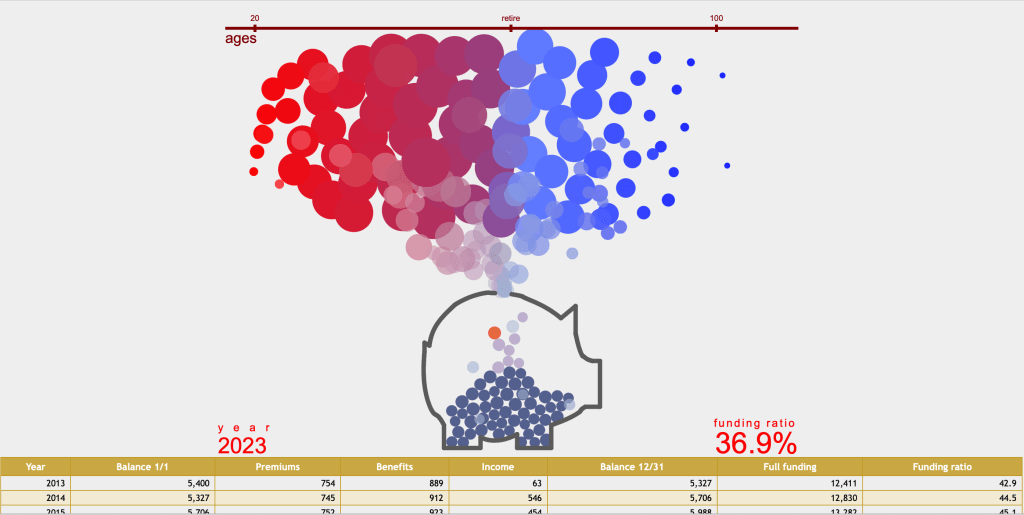


 Shifting to Equity Paybacks