“
Peter Ellis, The Accidental Societist
Capital is just savings…
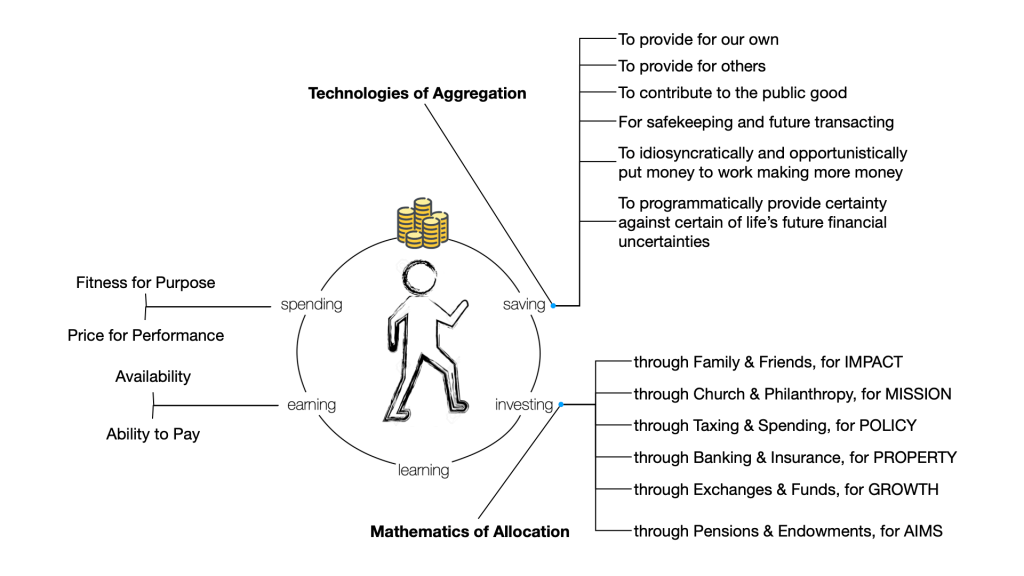
People use money to participation in society through enterprise and exchange (the economy) in diverse ways.
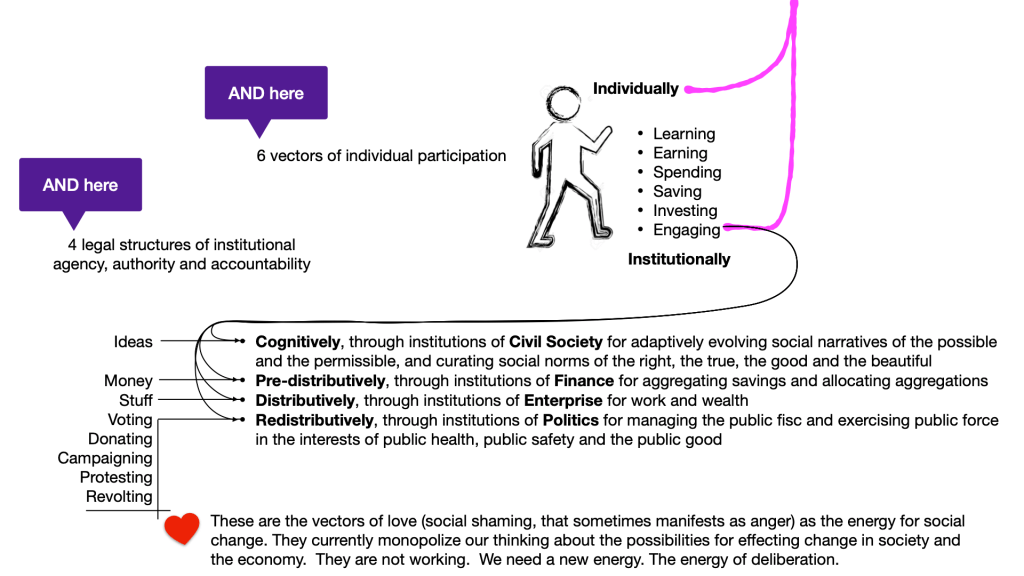
Earning
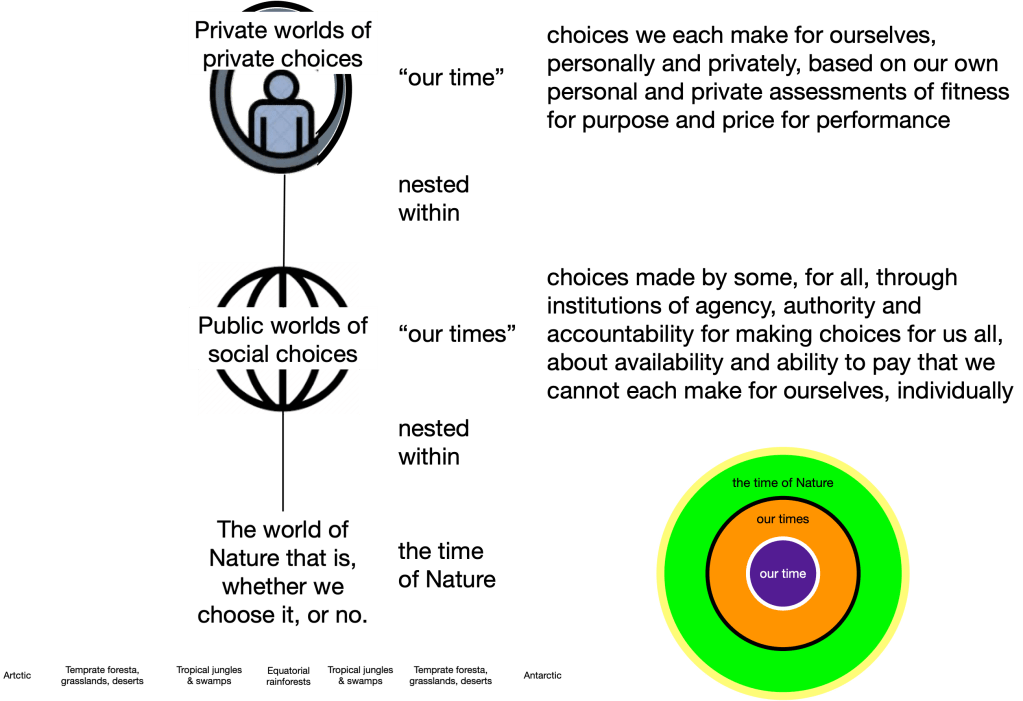
We work in order to earn money, as contributors to enterprise, and co-creators of the times within which our time is nested, and the shared social worlds out of which we each create through curation our private and personal worlds.
Spending
As buyers, we spend all or some of what we earn to acquire technology solutions to the everyday problems of everyday living, creating through curation, personally and privately, our own personal and private worlds for living our own best lives as best we can under the circumstances then prevailing, out of the shared social world we co-create, with others, through curation of the world of Nature into which we each and all are born, and upon which we each and all depend, for our being, and our continuation.
Learning
Through earning and spending we learn about the world about us, about the choices that are and can be made available to us, and about our capacity to choose, and how we can increase our capacity, to make more of the choices that we want to be able to make.
Learning is sometimes
- civic, social and informal: “the school of hard knocks”.
- formal, and educational through schooling
- on-the-job, and experiential
- autodidactic, and self-taught, through reading and watching and engaging in conversation in society
Saving
If we have the capacity to choose not to spend all that we earn, we save what we earn but do not spend, for some future purpose, at some future time.
Common purposes for saving include:
- .caring for our own
- caring for others
- contributing to the shared cost of public health, public safety and the public good
- safekeeping for future transacting
- putting money to work making more money, idiosyncratically and opportunistically
- programmatically providing certainty against certain of life’s future financial uncertainties
Investing
When savings aggregate to wealth, we build for ourselves the capacity to participate in financing Enterprise in doing the work of making copies available to popular choice.Currently available points of participation include:
- Family & Friends, aggregating money set aside to care for our own, and allocating those aggregations through patronage for IMPACT;
- Church & Philanthropy, aggregating money set aside to care for others, and allocating those aggregations as grants for MISSION;
- Taxing & Spending, aggregating money set aside to contribute to the costs of public health, public safety and the public good, and allocating those aggregations as subsidies for POLICY;
- Banking & Insurance, aggregating money set aside for safekeeping and future transacting, and allocating those aggregations through the monetization of PROPERTY (loans of money against a promise to repay, plus interest);
- Exchanges & Funds aggregating money set aside to put money to work, idiosyncratically, making more money, opportunistically, and allocating those aggregations through profit extraction from GROWTH (buying securitized shares in large scale, long dated financing agreements [bonds, for debt; shares of stock, for equity] at market clearing prices for those securities in expectation of extracting a profit from volatility and growth in market clearing prices for those securities in public, and private, alternative, markets for maintaining volatility and growth in market clearing prices for such securities, as gain on sale) ; and
- Pensions & Endowments, aggregating money set aside to programmatically provide certainty and against certain of life’s future financial uncertainties (income in a dignified retirement and for civil society institutions), and allocating those aggregations through the prudence in the exercise of capacity derived from legally constituted character, under the circumstances then prevailing, in undivided loyalty to contractually specified AIMS
- Suitability of the technology to the circumstances prevailing at the time
- Duration of the social contract with popular choice over time; and
- Dignity in how the business does business all the time, across all six vectors of cash flow through enterprise:
- Fair Trade, with suppliers
- Fair Engagement, with communities, of place and of interest;
- Fair Reckoning, with the consequences, for Nature, for Society and for our shared Future;
- Fair Working, in the workplace;
- Fair Dealing, in the marketplace;
- Fair Sharing, with the savers whose savings are the “raw material” from which financiers fashion Capital for Enterprise
Fair Sharing creates a new point of accountability in Finance, for using a mathematics of allocation that is fit to their technology of aggregation.
Exploring this question, of suitability of the mathematics to the technology to the mathematics of allocation opens up space for a critique of the currently customary practice of Asset Ownership financing Corporate Power through Profit Extraction from Growth in Selling Price.
That critique opens up a new conversation at the vanguard of public discourse, about Money and Finance and Enterprise and Society and
This question, asked in the context of Asset Ownership financing Corporate Power through Profit Extraction from Growth has no real power to inspire.
Asked in the innovative new context of Prudent Stewardship financing Social Cohesion, on a planetary scale, and within planetary limits, through Equity Payback from Suitability, Duration and Dignity, has real power to inspire citizen participation deliberation on where the money can and should be made to go.

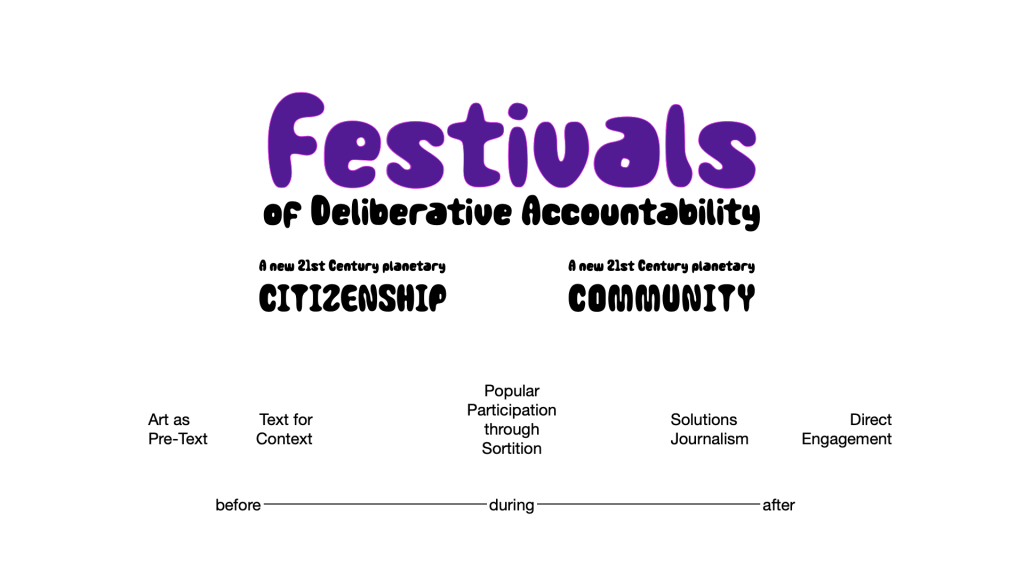
Our Festivals project is our concept of a plan for creating spaces for curating that deliberation.
Engaging
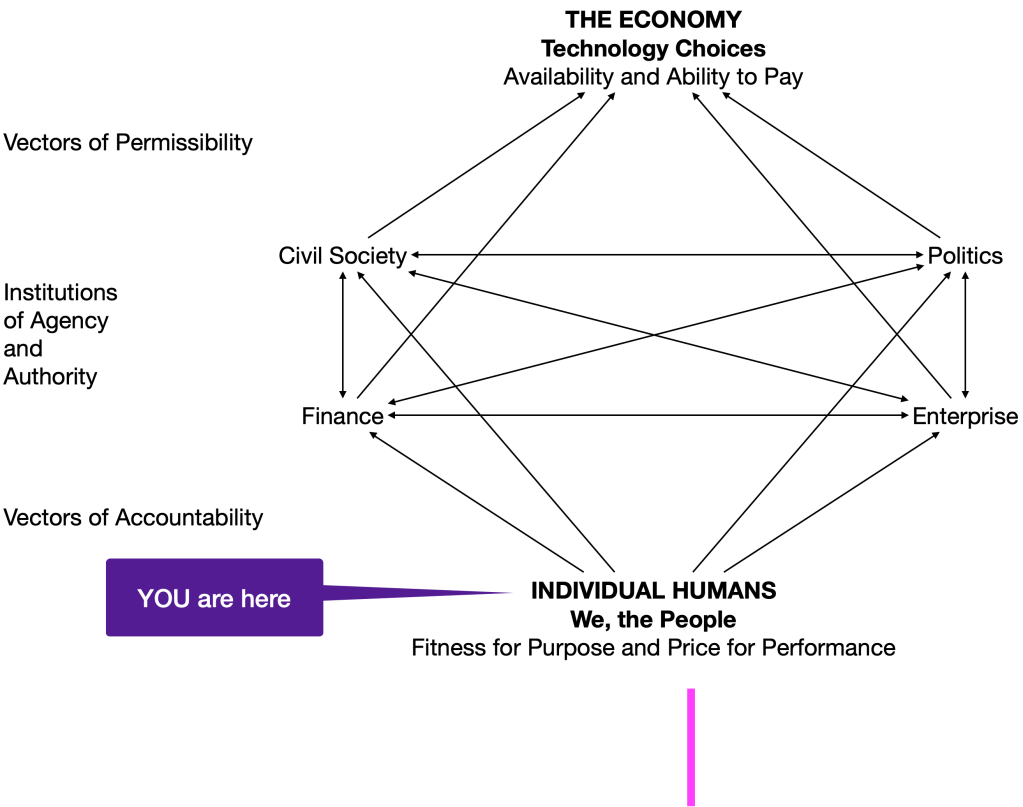
Money – as the social power and capacity to call on the time, effort and expertise of others, of others to call on our time, effort and expertise – motivates us to participate with other people in holding our institutions of Civil Society, Finance, Enterprise and Politics accountable for authenticity and integrity in their institutional exercises of their institutional authority/power true to their institutional agency/purpose/mission.


 Shifting to Equity Paybacks